
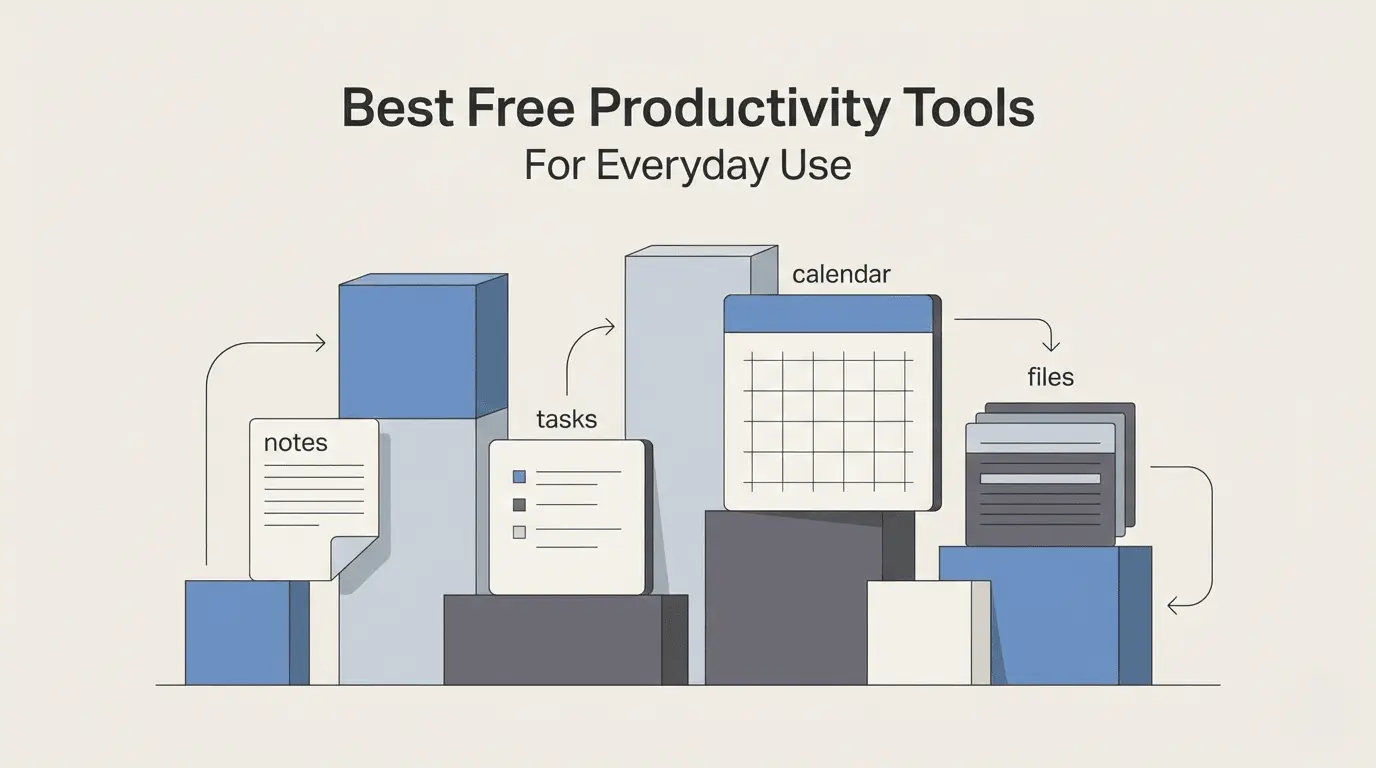
Why Free Productivity Tools Matter
Many people want to be more organized but hesitate to try productivity tools because of cost or complexity. The truth is, you don’t need expensive software to manage daily work.
Free productivity tools are often enough to:
Organize daily tasks
Capture ideas and notes
Reduce mental clutter
Stay consistent without pressure
The key is choosing simple tools that fit into daily life.
My Experience Using Free Productivity Tools
I started using free productivity tools while trying to simplify my daily work routine. Instead of subscribing to many apps, I tested basic tools that were already available on my phone and PC.
From my experience, productivity improved not because of advanced features, but because these tools were easy to use every day. When tools feel simple, they are more likely to become habits.
What Makes a Productivity Tool “Good” for Daily Use?
Not every productivity app is suitable for everyday use.
Good free tools usually:
Work on both phone and PC
Sync automatically
Are easy to open and use quickly
Do not overwhelm with features
If a tool feels heavy or complicated, it is less likely to be used consistently.
1️⃣ Free Task Management Tools
A task manager is the foundation of daily productivity.
Good free task tools help you:
List tasks in one place
Check priorities quickly
Mark progress easily
You don’t need advanced automation. A simple task list that you actually check every day is more effective than a powerful tool you forget to open.
These tools work best when combined with a clear daily structure. If you haven’t set that up yet, read our guide on how to build a simple digital productivity system for daily life.
2️⃣ Free Note-Taking Tools
Notes are where ideas, reminders, and information live.
A good free note tool should:
Capture information quickly
Sync across devices
Be easy to search
Avoid saving notes in too many places. One main note app is enough for most people.
3️⃣ Calendar Tools for Daily Planning
Calendars are useful when used correctly.
Free calendar tools are best for:
Time-based tasks
Appointments and deadlines
Blocking focused work time
They should not replace your task list. Instead, they support it by giving structure to your day.
4️⃣ Cloud Storage Tools
Cloud storage helps keep files accessible everywhere.
Free cloud tools are useful for:
Important documents
Reference files
Sharing files between phone and PC
Keeping files organized digitally reduces wasted time searching for information.
5️⃣ Simple Communication Tools
Productivity is affected by communication.
Free communication tools help with:
Quick coordination
Sharing updates
Reducing unnecessary meetings
However, notifications should be controlled to avoid constant interruptions.
How to Choose the Right Combination of Tools
The goal is not to use many tools.
The goal is to use a few tools well.
A simple setup usually includes:
One task manager
One note app
One calendar
One cloud storage service
This setup covers most daily productivity needs.
For a step-by-step method to organize daily work using these tools, see our guide on how to organize daily work using simple tech tools.
Common Mistakes When Using Productivity Tools
Even good tools fail when used incorrectly.
Common mistakes include:
Installing too many apps
Switching tools frequently
Over-customizing setups
Ignoring daily reviews
Consistency matters more than features.
How Long Does It Take to See Results?
Using free productivity tools effectively takes time.
Most people notice:
Better clarity within a few days
Improved daily flow after one week
Strong habits after two to three weeks
The key is keeping the setup simple.
Frequently Asked Questions
Are free productivity tools enough?
Yes. For most daily tasks, free tools are more than enough.
Do free tools have limitations?
They do, but those limits rarely affect everyday use.
Should I upgrade to paid tools?
Only if you clearly understand what extra features you need.
Can free tools work without internet access?
Some features may be limited offline, but basic use is often possible.
Final Thoughts
Free productivity tools are powerful when used with a clear system.
They work best when they support simple habits instead of forcing complex workflows.
From my experience, the most effective setup is one that feels easy to maintain every day. Start with free tools, build consistency, and upgrade only when truly needed.
This article connects directly with our productivity system guides and helps complete the foundation for daily digital organization.
.webp)




Comments 0
No comments yet
Be the first to share your thoughts!
Leave a Comment